
There are rivers… and then there are chalk streams.
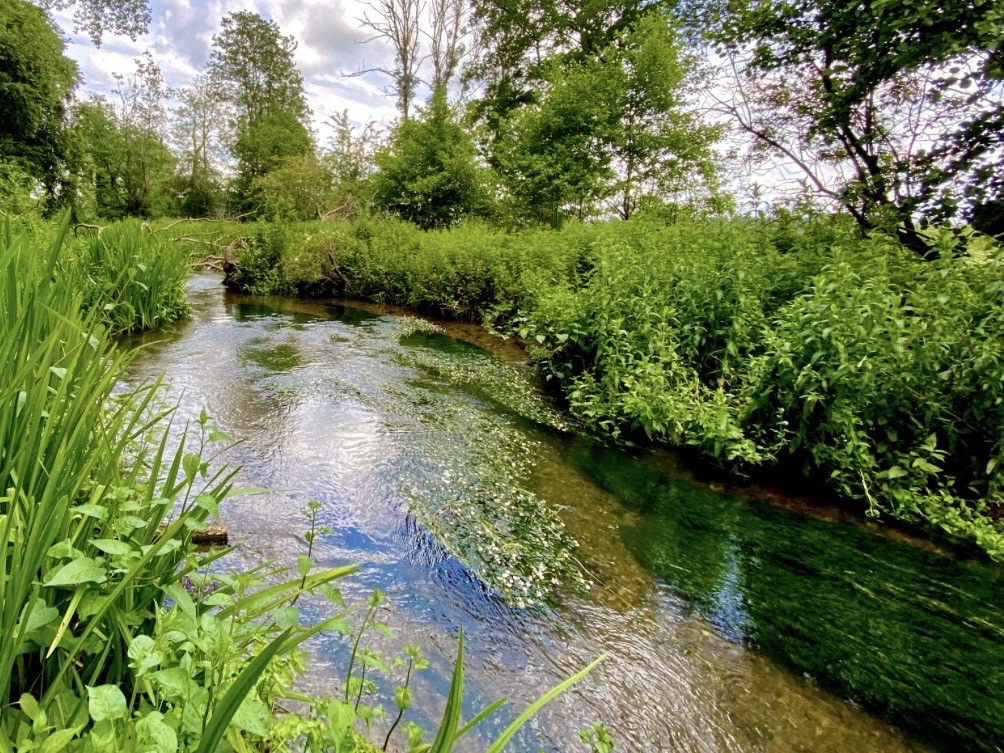
Clear, slow, almost impossibly clean water winding through quiet countryside. Gravel beds, waving weed, and fish that you can see long before you ever cast to them.
Fishing southern England’s chalk streams isn’t just about catching fish.
It’s about precision. Patience. And doing things properly.
Because on these rivers — everything matters.
⸻
What Makes Chalk Streams Special?
Southern England is home to some of the most famous chalk streams in the world.
Rivers like:
The Test The Itchen The Avon The Frome
All share the same defining features:
Crystal clear water Consistent temperature Rich insect life Healthy populations of wild trout and grayling
These rivers are often described as the birthplace of modern fly fishing.
And when you stand beside one, it’s easy to see why.
The Nature of Chalk Stream Fishing
Chalk streams are not forgiving.
Fish can see everything.
Your movement, casting, presentation…All need to be controlled and deliberate.
Unlike larger rivers, you’re rarely fishing blind.
You’re spotting fish… and then trying to outwit them.
Stealth Is Everything
If there’s one rule above all others:
👉 Don’t be seen
Approach slowly:
Stay low Use bankside cover Avoid sudden movement
Even your shadow can spook fish.
On a bright day, a careless step can send a good fish disappearing instantly.
Reading the Water
Chalk streams are structured, but subtle.
Look for:
Slight depressions in the gravel Edges of weed beds Slower seams beside faster water Undercut banks
Fish hold where:
👉 food comes to them easily
Often, the best lies don’t look dramatic — they look quiet.
Dry Fly Fishing (The Classic Approach)
Chalk streams are synonymous with dry fly fishing.
Watching a trout rise, placing a fly gently on the surface, and seeing it taken is one of the purest forms of fishing.
Key points:
Match the hatch where possible, keep casts light and accurate. Prioritise drift over distance
A drag-free drift is everything…If your fly behaves unnaturally, fish will refuse it.
Nymphing — When Fish Aren’t Rising
Not every day is a dry fly day…When fish aren’t looking up:
👉 nymphing becomes essential
Use:
Light, natural patterns. Fine tippets, and controlled drifts.
The key is subtlety…Heavy, splashy presentations don’t work here.
Casting — Less Power, More Control (something I have been working on and have to remind myself of regularly!).
Chalk stream casting isn’t about distance.
It’s about:
accuracy control delicacy…Short, precise casts outperform long, uncontrolled ones every time.
A roll cast when backcasting is restricted can be an essential skill to learn and master.
Often:
👉 one perfect cast is all you need
Equipment for Chalk Streams
Keep things refined and balanced.
Rod
9ft 4 or 5 weight is the staple of chalkstream fishing….a shorter rod can be useful if branches heavily restrict casting, or when fishing very narrow streams.
Line
Floating line…. A weight forward (WF) Short bellied taper (SBT) or shooting head (SH) line is ideal as it allows you to punch the fly line out with minimal effort, or a well timed roll cast.
Leader
Long, fine leader (9–15ft) of 4x or 5x… where really fine presentation is required 6x can be used, but ideally paired with a lighter rod to absorb the shock from playing a fish.
Flies:
Dry flies (mayfly, olives, midges) Small nymphs… this is a whole blog post in its own right! Natural patterns work best for chalk stream fishing in my experience. When the mayfly hatch is in full flow, large patterns attract kamikaze like takes… on days when the trout are fussy, small dry patterns can do the trick.
When a subsurface fly is required, small Nymphs and gold heads can be deadly. Again, natural patterns would be the go to choice.
👉 Lighter setups improve presentation and control
The Challenge
Chalk stream fishing can be frustrating.
You’ll:
spook fish get refusals make imperfect casts, but that’s part of it…Every fish feels earned.
And when it comes together — when a trout rises confidently to your fly — it’s incredibly satisfying.
More Than Just Fishing
What makes these rivers special isn’t just the fishing.
It’s everything around it. The quiet countryside, the slow pace, the feeling of stepping into something timeless.
There’s a heritage here.
A sense that people have been standing in these same places, making the same casts, for generations.
Final Thought
Fishing southern England’s chalk streams isn’t about numbers, it’s about doing things properly.
Taking your time. Paying attention. Respecting the water and the fish.
Because on these rivers, success isn’t measured by how many you catch —
but how well you fish…
One small wild brownie could be the crowning moment of a full days wading, or patrolling the bank…. But a single fish from a Chalkstream can feel like a bag full from any other venue.
📍 Quick Summary
Location: Southern England chalk streams (Test, Itchen, Avon, Frome)
Target species: Brown trout, grayling
Best method: Dry fly (with nymphing as backup)
Key skill: Stealth and presentation
Top tip: Slow down — everything matters
 Life That’s Reel
Leave a comment